
If you’re looking for the best espresso machine under $500, you’re in the sweet spot between entry-level machines and serious home barista gear.
At this price point, you can find compact espresso machines with solid pressure, fast heat-up times, milk frothing capabilities, and better consistency than cheap budget models.
In this guide, we compare the top options for beginners, casual home users, and buyers who want the best value for money.
👉 If you’re new to home espresso, also check our guide to the best espresso machines for beginners.
Quick Verdict
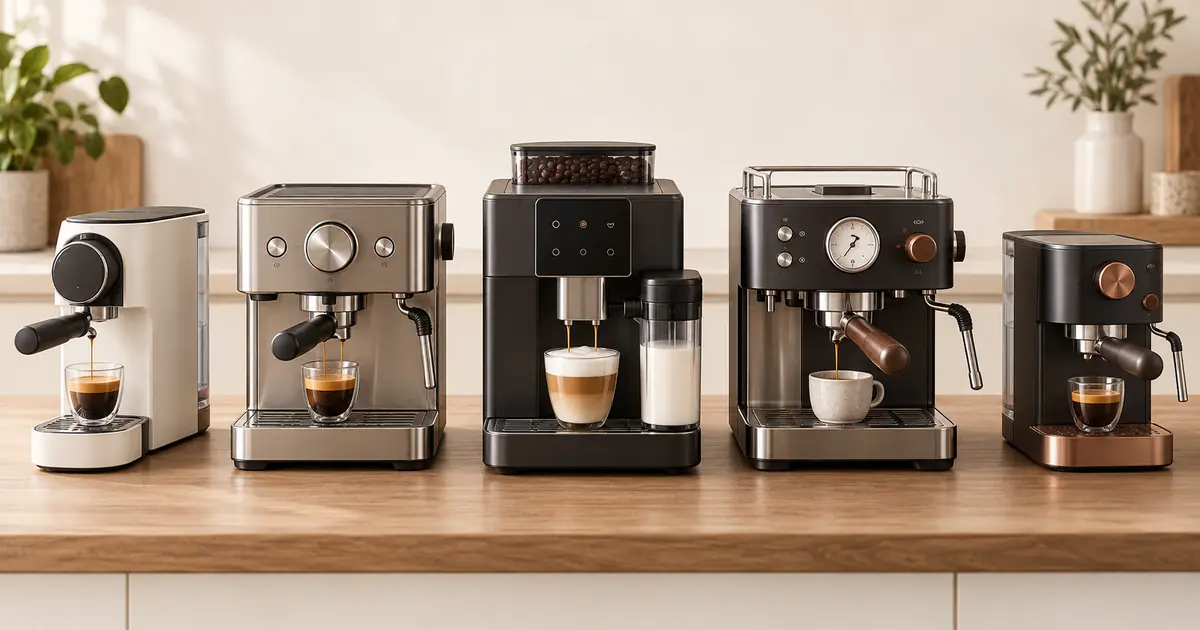
For most buyers, the Breville Bambino Plus is the best espresso machine under $500. Its three-second heat-up, compact footprint, simple controls, and automatic milk texturing make it the strongest all-around choice for espresso, lattes, and cappuccinos. The main limitation is that it does not include a grinder, so first-time buyers should include one in their total budget.
The Ninja Luxe Café Mini Plus is the better all-in-one value if you need a grinder as well as the machine. It combines a built-in grinder and scale with guided brewing and hands-free frothing, reducing both guesswork and the number of separate tools required.
For more hands-on control, consider the MiiCoffee Apex V2 when available. The De’Longhi Dedica Duo is the best fit for a narrow counter, while the Gevi EzBru 1000 is the strongest budget-oriented option. The right choice ultimately depends on whether you value simplicity, an integrated grinder, compact size, or greater control over extraction.
Quick Picks
- Best Overall: Breville Bambino Plus — The best balance of speed, compact size, approachable controls, and automatic milk frothing.
- Best All-in-One: Ninja Luxe Café Mini Plus — Includes a grinder, scale, guided brewing, and hands-free frothing in one compact system.
- Best for Espresso Control: MiiCoffee Apex V2 — Offers a 58 mm portafilter, dual PID temperature control, and adjustable pre-infusion for more hands-on users.
- Best Compact Option: De’Longhi Dedica Duo — A slim machine with straightforward controls, manual milk steaming, and a dedicated cold brew setting.
- Best Budget Option: Gevi EzBru 1000 — Combines a 58 mm portafilter, adjustable temperature and volume settings, and PID temperature control at a lower price.
👉 Looking for smaller options? See our best compact espresso machine guide.
In This Guide
How We Chose the Best Espresso Machines Under $500
To identify the strongest options in this price range, we compared each machine using the factors that have the greatest effect on everyday ownership:
- Espresso performance and control: Heating system, temperature management, pre-infusion, portafilter design, and the amount of control available during extraction.
- Ease of use: Warm-up time, control layout, guided features, milk preparation, and the effort required for daily cleaning.
- Milk-drink capability: The type of steam wand or automatic frothing system and how well it suits lattes, cappuccinos, and other milk-based drinks.
- Total setup cost: Whether the machine includes a grinder and which additional accessories may be needed for a complete espresso setup.
- Size and construction: Countertop footprint, water-tank capacity, build quality, and suitability for smaller kitchens.
- Overall value: Features, versatility, brand support, availability, and typical U.S. pricing relative to the intended buyer.
Our rankings focus on practical buyer fit rather than advertised pump pressure alone. The best choice is not automatically the machine with the highest pressure rating or the most automation—it is the one that best matches the user’s preferred drinks, available space, budget, and desired level of control.
Comparison Table
| Product | Grinder Included | Milk System | Best For | Typical Price* |
|---|---|---|---|---|
| Breville Bambino Plus | NO | Automatic and manual | Best overall | About $500 |
| Ninja Luxe Café Mini Plus | YES | Hands-free automatic | All-in-one convenience | About $500 |
| MiiCoffee Apex V2 | NO | Manual steam wand | Espresso control | About $500 |
| De’Longhi Dedica Duo | NO | Manual steam wand | Small kitchens | About $250 |
| Gevi EzBru 1000 | NO | Manual steam wand | Budget buyers | About $240 |
*Prices are approximate regular U.S. prices and may change during promotions. Availability can also vary, particularly for the MiiCoffee Apex V2.
The Ninja Luxe Café Mini Plus is the only machine in this comparison with a built-in grinder. Buyers choosing one of the other four models should include a suitable espresso grinder in their total budget.
👉 You can also compare brands in our Breville vs De’Longhi guide.
Best Espresso Machines Under $500
1. Breville Bambino Plus — Best Overall
The Breville Bambino Plus earns our top position because it combines a compact design, fast operation, and genuinely useful automation without removing the option to control the milk manually. It is particularly well suited to home users who want consistent espresso and milk drinks without managing a complicated workflow every morning.
Its ThermoJet heating system reaches brewing temperature in approximately three seconds. The 54 mm portafilter accommodates an 18-gram dose, while low-pressure pre-infusion and nine-bar extraction provide a more appropriate espresso workflow than headline pump-pressure numbers alone suggest.
The automatic steam wand is another major advantage. It offers three milk-temperature settings and three texture levels, but it can also be used manually as the user becomes more comfortable with milk preparation.
The Bambino Plus does not include a grinder. That makes it a better choice for buyers who already own a capable espresso grinder—or who prefer selecting one separately—than for someone seeking a complete bean-to-cup setup within a strict $500 total budget.
Pros
- Three-second heat-up time
- Compact footprint
- Automatic and manual milk texturing
- Simple controls for everyday use
- Nine-bar extraction with low-pressure pre-infusion
Cons
- No built-in grinder
- Uses nearly the entire $500 machine budget
- Offers less extraction control than the MiiCoffee Apex V2
Best for: Buyers who want the strongest balance of speed, compact size, espresso performance, and easy milk preparation.
👉 Want a closer look at our top pick? Read our full Breville Bambino Plus review.
2. Ninja Luxe Café Mini Plus — Best All-in-One
The Ninja Luxe Café Mini Plus is the strongest all-in-one option in this comparison. It combines an espresso machine, conical burr grinder, precision scale, and automatic milk frother in a single system while remaining within the $500 limit.
Ninja’s Barista Assist technology provides grind recommendations and automatically adjusts brewing variables. Weight-based dosing measures the required amount of ground coffee for each drink, helping beginners avoid one of the most common sources of inconsistent espresso.
The hands-free steam wand can prepare steamed, thin, or thick microfoam using dairy or plant-based milk. The machine also brews hot and iced drip coffee, making it more versatile for households that do not drink espresso exclusively.
This integrated approach reduces the number of separate tools required, but it also provides less opportunity to upgrade individual components later. Buyers who already own a capable grinder or want extensive manual control may receive better value from the Breville Bambino Plus or MiiCoffee Apex V2.
Pros
- Built-in conical burr grinder
- Integrated precision scale and weight-based dosing
- Guided grind and brewing recommendations
- Three hands-free milk-frothing presets
- Brews espresso and hot or iced drip coffee
- Complete setup within the $500 machine budget
Cons
- Uses nearly the entire budget
- Less manual extraction control than the MiiCoffee Apex V2
- Built-in components are less flexible to upgrade separately
- Less compelling for buyers who already own an espresso grinder
Best for: Beginners and convenience-focused buyers who want a complete espresso, grinder, and milk-frothing system without assembling separate equipment.
3. MiiCoffee Apex V2 — Best for Espresso Control
The MiiCoffee Apex V2 is the strongest option in this ranking for buyers who want greater control over espresso extraction. While the Breville and Ninja prioritize speed or convenience, the Apex V2 provides several features normally associated with more enthusiast-focused machines.
The current V2 model includes separate PID temperature controls for brewing and steaming, an over-pressure valve, and adjustable pre-infusion. Its pressure gauge and shot timer also provide useful feedback when adjusting grind size, dose, and extraction time.
A 58 mm commercial-style portafilter makes the Apex V2 compatible with a broader range of espresso accessories. Internally, it uses a 550 ml stainless-steel brew boiler and a dedicated thermoblock for steam, giving users more control over both espresso and milk preparation.
This machine requires more involvement than the other leading choices. It does not include a grinder, takes approximately five minutes to warm up fully, and rewards buyers who are willing to learn how grind size, dose, temperature, and pre-infusion affect extraction. Availability can also be more limited than with larger appliance brands.
Pros
- Separate PID controls for brewing and steaming
- Adjustable temperature and pre-infusion
- 58 mm commercial-style portafilter
- Pressure gauge and built-in shot timer
- Over-pressure valve and nine-bar extraction target
- Dedicated thermoblock for steaming
Cons
- No built-in grinder
- Steeper learning curve than the Breville or Ninja
- Approximately five-minute warm-up time
- Availability can be limited
- Uses nearly the entire $500 machine budget
Best for: Buyers who already own a suitable grinder and want more control over temperature, pressure, pre-infusion, and the overall espresso-making process.
4. De’Longhi Dedica Duo — Best Compact Option
The De’Longhi Dedica Duo is the best option in this ranking for buyers with limited counter space. At approximately 5.9 inches wide, it can fit into narrow kitchen areas while still providing the essential features needed for espresso and milk-based drinks.
Its touch-control panel includes preset options for single espresso, double espresso, and cold brew. De’Longhi’s cold-extraction setting can prepare a cold coffee drink in less than five minutes, adding useful versatility for buyers who regularly switch between hot and iced beverages.
The cool-touch My LatteArt steam wand provides manual control over milk texture and can be used with dairy or plant-based alternatives. Unlike the automatic systems on the Breville and Ninja, it requires some practice, but it also gives the user more involvement in milk preparation.
The Dedica Duo costs substantially less than the three machines ranked above it. Although it does not include a grinder, its lower machine price leaves enough room in a $500 total budget for a separate espresso grinder and basic accessories.
Pros
- Approximately 5.9 inches wide
- Presets for espresso, double espresso, and cold brew
- Intuitive touch controls
- Cool-touch manual steam wand
- Removable double-height drip tray
- Leaves room in the budget for a separate grinder
Cons
- No built-in grinder
- Less extraction control than the MiiCoffee Apex V2
- Manual milk frothing requires practice
- Smaller water tank than larger machines
Best for: Buyers with limited counter space who want an affordable, slim machine for espresso, milk drinks, and occasional cold coffee.
5. Gevi EzBru 1000 — Best Budget Option
The Gevi EzBru 1000 is the strongest budget-oriented option in this ranking. At approximately half the price of the three leading machines, it includes several features that are uncommon among entry-level espresso machines.
Its 58 mm portafilter provides a more standard working size than many compact budget models. The machine also combines PID and NTC temperature control, with four brewing-temperature settings ranging from 194°F to 204°F. Four adjustable brewing volumes allow users to customize the amount of water delivered for different drinks.
A manual steam wand handles milk preparation for lattes and cappuccinos. It requires more practice than the automatic systems on the Breville and Ninja, but it gives budget-conscious buyers the essential tools for learning espresso and milk texturing.
Gevi advertises a 20-bar pump, but that headline number should not be the main reason to choose this machine. Its more meaningful advantages are temperature adjustment, the 58 mm portafilter, programmable volume, and a price that leaves room for a separate grinder.
Pros
- Lower price than the other ranked machines
- 58 mm portafilter
- PID and NTC temperature control
- Four adjustable brewing temperatures
- Four programmable brewing volumes
- Manual steam wand for milk drinks
- Leaves room in the budget for a grinder and accessories
Cons
- No built-in grinder
- Manual milk frothing requires practice
- Controls and construction are less refined than the leading picks
- Fewer guided features for complete beginners
Best for: Budget-conscious buyers who want adjustable temperature, a 58 mm portafilter, and enough money left for a separate grinder.
What You Can Realistically Expect Under $500
The under-$500 category is no longer limited to basic entry-level machines. Buyers can now choose between fast compact machines with automatic milk preparation, guided all-in-one systems with built-in grinders, enthusiast-focused machines with adjustable extraction settings, and lower-cost models that leave room for a separate grinder.
Depending on the model, this budget can provide stable temperature management, low-pressure pre-infusion, nine-bar extraction, programmable shot volumes, useful manual steam wands, or automatic milk texturing. However, no machine in this range offers every advantage without compromise.
Most models still require a separate grinder. All-in-one machines reduce the number of accessories needed but provide less flexibility for future upgrades. Machines with greater extraction control require a more involved workflow, while lower-priced options usually have simpler construction and fewer guided features.
The goal is not to find a machine that does everything. It is to choose the combination of convenience, control, size, and total setup cost that best matches the drinks you prepare most often.
How to Plan Your Total Espresso Budget
Before choosing a machine, decide whether the $500 limit applies only to the espresso machine or to the complete setup. This distinction can change which option provides the best value.
- If you already own an espresso grinder: The Breville Bambino Plus and MiiCoffee Apex V2 allow you to invest almost the entire budget in the machine itself.
- If you need a complete all-in-one system: The Ninja Luxe Café Mini Plus includes a grinder, scale, and automatic milk frother, reducing the need for separate equipment.
- If the complete setup must remain below $500: The De’Longhi Dedica Duo or Gevi EzBru 1000 leaves more room for a separate grinder, scale, and accessories.
A capable burr grinder is more important than collecting numerous accessories. Consistent grind size has a direct effect on extraction, while a basic digital scale helps make dosing and shot timing more repeatable.
Also check what each machine already includes before purchasing a tamper, milk pitcher, filter basket, or other tools separately. Finally, reserve a small portion of the long-term budget for fresh coffee, cleaning tablets, descaling products, water filters, and occasional replacement parts.
How to Choose the Best Espresso Machine Under $500
1. Decide how much assistance you want
The Ninja Luxe Café Mini Plus provides the most guided workflow, while the Breville Bambino Plus balances simple controls with some manual flexibility. The MiiCoffee Apex V2 requires more involvement but provides greater control over extraction. The Dedica Duo and Gevi EzBru 1000 occupy the middle ground with straightforward brewing controls and manual milk steaming.
👉 You should also consider whether you want a manual or automatic espresso machine before choosing.
2. Choose between a built-in and separate grinder
The Ninja is the only machine in this ranking with a built-in grinder. An integrated grinder simplifies the setup, while a separate grinder gives you more flexibility to upgrade individual components and adjust your equipment over time.
If you already own an espresso-capable grinder, paying for another one inside the machine may provide little additional value.
3. Consider how often you prepare milk drinks
Frequent latte and cappuccino drinkers may prefer the automatic milk systems on the Breville or Ninja. These reduce the learning curve and make repeated drinks easier.
Manual steam wands provide more direct control but require practice. They are better suited to buyers who want to learn milk texturing or who do not mind a more hands-on routine.
4. Measure your available space
Check the machine’s width, depth, and height before buying. Also allow enough clearance to remove the water tank, refill a bean hopper, or place cups on top.
The De’Longhi Dedica Duo is the narrowest option in this ranking, while the Ninja requires more room because it combines several components in one machine.
5. Look beyond advertised pump pressure
A 15-bar or 20-bar pump does not automatically produce better espresso. Temperature stability, appropriate extraction pressure, pre-infusion, grind consistency, and a repeatable workflow have a greater effect on the final result.
Focus on the features you will actually use rather than selecting a machine based on the largest pressure number printed on the box.
What to Avoid When Buying an Espresso Machine
Overlooking availability and support: Before buying, check current stock, warranty coverage, replacement parts, and the retailer’s return policy—especially with less widely distributed models.
Choosing by pump pressure alone: A machine advertised with 20 bars is not automatically better than one designed to extract espresso at nine bars. Temperature stability and grind consistency matter more.
Spending the full budget without considering a grinder: Unless the machine includes one, a suitable espresso grinder must be included in the total setup cost.
Paying for features you will not use: Advanced temperature and pre-infusion controls provide value only if you want a more involved espresso workflow.
Ignoring the milk system: Automatic frothing is easier for frequent milk drinks, while a manual steam wand requires practice but provides more control.
Forgetting countertop clearance: Measure the available width, depth, and height, including the space required to refill the water tank or bean hopper.
👉 If you are still evaluating your options, read our guide on how to choose an espresso machine.
Frequently Asked Questions
Is $500 enough for a good espresso machine?
Yes. A $500 machine budget can provide fast heating, stable temperature control, useful milk preparation, or an integrated grinder, depending on the model. Remember that the complete setup may cost more if the machine requires a separate grinder.
What is the best espresso machine under $500 for beginners?
The Breville Bambino Plus is our best overall beginner-friendly choice because it combines simple controls, fast heating, and automatic milk texturing. Buyers who also need a grinder may prefer the Ninja Luxe Café Mini Plus because it provides a more complete and guided setup.
Which espresso machine under $500 offers the most control?
The MiiCoffee Apex V2 provides the most extraction control in this ranking. It includes separate PID controls for brewing and steaming, adjustable pre-infusion, an over-pressure valve, a pressure gauge, and a shot timer.
Do I need a grinder to make good espresso?
Yes, unless the machine already includes one. Freshly ground coffee with a consistent espresso-fine grind makes dialing in and repeating extractions considerably easier. The Ninja includes a grinder; the other four ranked machines require a separate one.
Is a 15-bar or 20-bar pump better for espresso?
Not necessarily. These numbers usually describe the pump’s maximum capacity rather than the pressure used throughout extraction. Well-designed home machines commonly target approximately nine bars at the coffee puck. Temperature stability, grind quality, dose, and preparation are more important than the largest advertised pressure number.
Related Reading
If you want to continue comparing home espresso options, these guides may also help:
Final Verdict
The Breville Bambino Plus is the best espresso machine under $500 for most buyers. It combines fast heating, a compact footprint, straightforward controls, and automatic milk texturing without making the daily workflow unnecessarily complicated. It is the strongest choice if you already own an espresso grinder or can budget for one separately.
Choose the Ninja Luxe Café Mini Plus if you need a grinder, scale, guided brewing, and automatic frothing in one machine. The MiiCoffee Apex V2 is the better option for buyers who prioritize extraction control, while the De’Longhi Dedica Duo is best suited to narrow countertops. The Gevi EzBru 1000 provides the most accessible entry point for budget-conscious buyers.
No single machine is ideal for everyone. The best choice depends on whether your priority is everyday simplicity, a complete all-in-one setup, greater espresso control, compact dimensions, or a lower initial price.
Disclosure
This article may contain affiliate links. If you purchase through one of these links, we may earn a commission at no additional cost to you. This does not affect which products we include or how we rank them.